Almost a year ago, I was talking with several local actors and a couple of agents. This market had lots of education for actors FROM actors. But very little for actors FROM directors. I mean, we sit on the other side of the audition table and shake your hand when you come in. We glance at your headshot and briefly screen the resume. Then we watch and listen as you put it all out there. What are we thinking? Haven't you wanted to know?
When you walk out, what do the director and producer talk about? How much sway does the casting assistant or the reader have? Is it wrong to talk too much or to talk too little?
I decided that the local actors needed some straight talk from a director of feature films. So I created the first seminar-- "Acting: A Director's POV" and also married it with an Audition Workshop where they would get one on one time with me and also sit with me on auditions from this other side of the table.
It was a big hit and I've only done it that once. Now I'm going to do it again. We'll have the seminar, only $29 for half day (pick morning or afternoon) on Saturday August 21. Or be one of the twelve for the audition workshop, which will include the seminar, and an all day, hands on Workshop on Sunday, August 22. The two day is $150.
Click here for info and registration.
As a disciple of Jesus, as the Apostle Paul wrote, I have to kill the flesh-- or the "Ego" as I call it. Daily. As a filmmaker, I write about filmmaking techniques as well as my spiritual trek as a Believer. Browse through to find entries on camera techniques, acting, fundraising, as well as definition of Love, Purpose and separating Ego.
Saturday, July 31, 2010
Friday, July 30, 2010
Labor Can Be Longer Than Nine Months
My non-movie-making friends often ask about a movie we're making-- wondering why it isn't out yet and in stores. Over ten years, I've made five films... So there's the average pace from start to finish, for me, of two years per movie. Sure I'd like to see that shrink.
In the studios, a director can do two or three movies a year tops. A producer can do a bunch because he's multitasking and doesn't have to be exclusive for a long time on a movie.
Once we yell "wrap," people often wonder why they don't see the movie in the theaters a few months later. Here's what happens in the indie world. My fastest film to distribution from wrap, was about nine months-- "A Promise Kept." We wrapped at the end of January and it was available through the distributor by October.
The next film "Striking Range," took significantly longer. We wrapped in early June. By the next June we were talking with Sony, and in late November, it was released. So wrap to shelf was 18 months-- double the time of APK.
Right now, we're coming up on the year anniversary of the shoot for "Rising Stars." We wrapped at the very end of August. Looks like a late September release in a few select theaters, so wrap to screen time is right in the middle of the average-- 12 to 13 months.
Why so long? Well first, the filmmakers have to perfect the edit, and this is what can take so long. Watching it amongst the team... focus groups with others... constantly questioning every little cut in every little scene. Getting to the locked edit can be three or four months on average-- a lot longer other times. Then after Lock, it will take minimum of six weeks, but more likely three or four months for sound and music, lab and color to take place. Then you have your "screener."
So then you schedule distributor screenings and this can take a month or two. Distributors are thinking and talking amongst themselves-- acquisitions bring it to the team, marketing watches and weighs in, then the big dog decides yes or no. If a yes, then an offer is made. Then there's at least a couple of weeks of going back and forth on the offer.
The distributor will need a minimum of five months or so to properly prepare a release. If you're starting with foreign sales, then it can be the following month (hence the quickness of APK).
Now for studio films, it's different-- they're in an assembly line. They don't have to try and get the movie picked up. But locking can take a lot longer and various suits try to justify their studio position by weighing in on the edit. Movie making by committee. Ewwww.
In the studios, a director can do two or three movies a year tops. A producer can do a bunch because he's multitasking and doesn't have to be exclusive for a long time on a movie.
Once we yell "wrap," people often wonder why they don't see the movie in the theaters a few months later. Here's what happens in the indie world. My fastest film to distribution from wrap, was about nine months-- "A Promise Kept." We wrapped at the end of January and it was available through the distributor by October.
The next film "Striking Range," took significantly longer. We wrapped in early June. By the next June we were talking with Sony, and in late November, it was released. So wrap to shelf was 18 months-- double the time of APK.
Right now, we're coming up on the year anniversary of the shoot for "Rising Stars." We wrapped at the very end of August. Looks like a late September release in a few select theaters, so wrap to screen time is right in the middle of the average-- 12 to 13 months.
Why so long? Well first, the filmmakers have to perfect the edit, and this is what can take so long. Watching it amongst the team... focus groups with others... constantly questioning every little cut in every little scene. Getting to the locked edit can be three or four months on average-- a lot longer other times. Then after Lock, it will take minimum of six weeks, but more likely three or four months for sound and music, lab and color to take place. Then you have your "screener."
So then you schedule distributor screenings and this can take a month or two. Distributors are thinking and talking amongst themselves-- acquisitions bring it to the team, marketing watches and weighs in, then the big dog decides yes or no. If a yes, then an offer is made. Then there's at least a couple of weeks of going back and forth on the offer.
The distributor will need a minimum of five months or so to properly prepare a release. If you're starting with foreign sales, then it can be the following month (hence the quickness of APK).
Now for studio films, it's different-- they're in an assembly line. They don't have to try and get the movie picked up. But locking can take a lot longer and various suits try to justify their studio position by weighing in on the edit. Movie making by committee. Ewwww.
Labels:
A Promise Kept,
Rising Stars,
Striking Range,
The Gunman
Thursday, July 29, 2010
INT. HOME OFFICE -- DAY
Screenwriters are an interesting group. And for those who write for movies, they call themselves screenwriters-- not scriptwriters. The screenwriters I know personally all have these babies... born out of a passion to tell a story. And like real children, these "parents" try to nurture and grow the child, hoping that it goes to child and finds a nice paying job.
To see your child become a fully grown movie, the screenwriter/parent has two primary paths. They can send the child off to boarding school where the studio will try and take care of him, or they can try and raise the child themselves.
Okay enough with the analogy.
You screenwriters-- you have a script or two (or five) and you want to see them up on the big screen. Most people work hard on trying to get a studio, or producer to option the script and hopefully see it go into production. This path is the most common, and as difficult as it is, it's easier than the alternative, which we'll go into in a moment.
For this route, it's as easy as one, two, three... seven.
Most people can't get to step 2 let alone any of the others. And actually, most don't get to step one except in their own mind.
So what's the harder, less common second path? DIY. Do It Yourself. Green light your own movie. (Shameless plug-- get the "Greenlight Yourself" training DVD on how to make your movie by clicking here.) When a writer just can't wait on agents, producers and directors, she studies about how to make the thing herself. It's how many indie filmmakers come into existence. Now instead of waiting on producers, she'll be waiting on investors, but at least she can control the upbringing of her baby. (Oops, sorry, slipped back into allegory).
So you screenwriters out there, you got two paths in front of you. Which are you going to take?
To see your child become a fully grown movie, the screenwriter/parent has two primary paths. They can send the child off to boarding school where the studio will try and take care of him, or they can try and raise the child themselves.
Okay enough with the analogy.
You screenwriters-- you have a script or two (or five) and you want to see them up on the big screen. Most people work hard on trying to get a studio, or producer to option the script and hopefully see it go into production. This path is the most common, and as difficult as it is, it's easier than the alternative, which we'll go into in a moment.
For this route, it's as easy as one, two, three... seven.
- Write Totally Awesome Script
- Find Agent
- Agent Shops to Studios and Producers
- Agent Fields All The Offers
- You Pick the Best
- You Cash the Big Check
- You Sit At Premiere, Much Richer, and Watch the Big Screen as they Butcher Your Child
Most people can't get to step 2 let alone any of the others. And actually, most don't get to step one except in their own mind.
So what's the harder, less common second path? DIY. Do It Yourself. Green light your own movie. (Shameless plug-- get the "Greenlight Yourself" training DVD on how to make your movie by clicking here.) When a writer just can't wait on agents, producers and directors, she studies about how to make the thing herself. It's how many indie filmmakers come into existence. Now instead of waiting on producers, she'll be waiting on investors, but at least she can control the upbringing of her baby. (Oops, sorry, slipped back into allegory).
So you screenwriters out there, you got two paths in front of you. Which are you going to take?
Labels:
screenwriting
Wednesday, July 28, 2010
Top Page for July
Church Movie night is the top read page this month. More than a year ago, I had started corresponding with Jim David, who had ordered "The Imposter" for his church. The majority of churches that ordered the movie, were ordered by staff-- pastors or youth pastors. But here was a "civilian" who's not content to sit on the sidelines. He wants in the battle.
He took initiative to start a movie ministry at his church and I am hoping people find his story inspirational. And I hope others start to do the same at their church. Jesus often taught by telling stories, and the wisdom in this is huge-- you can teach a point by telling the point. Or you can tell a story that covers the principle--not just the rule.
If anyone needs help in setting up a movie ministry at your church, please don't hesitate to contact me or Jim.
Here are the links to July's top story--
Part 1
Part 2
He took initiative to start a movie ministry at his church and I am hoping people find his story inspirational. And I hope others start to do the same at their church. Jesus often taught by telling stories, and the wisdom in this is huge-- you can teach a point by telling the point. Or you can tell a story that covers the principle--not just the rule.
If anyone needs help in setting up a movie ministry at your church, please don't hesitate to contact me or Jim.
Here are the links to July's top story--
Part 1
Part 2
Labels:
The Imposter movie
Tuesday, July 27, 2010
Acting for a Living
Many, many people dream of being an actor. They watch their favorite television shows and movies and see Hanks looking and acting so naturally. Well, I can do that! All I have to do is just be me!
Acting, when done right, looks incredibly easy. But acting is an extremely difficult job, so it fools countless many into pursuing a professional path way outside the individuals natural giftings. I can't tell you how many times I've had someone come up to me telling me they could really help me out-- they'd come in and save me and be an actor. You know, now I have the missing puzzle piece! Thank you!
One individual, who had never taken an acting class in his life, didn't understand why I had hired this seasoned LA actor (who's face you'd recognize). He could do that! I just smile and nod and mumble something like, you know how it goes... or thanks, maybe next time.
Now, for the person who determines they're going to make a living getting acting gigs, it's going to be a very tough road. First, location does matter for this. If you live in a small rural area, not close to any metropolitan locations, chances are, there's just not enough work. Even for those that live in Dallas-Fort Worth, there's very few of the actors that are represented here, that actually do this full time. Most have a day job that's flexible, allowing them to take off to go to auditions or be on the set.
Which brings me to another arena of acting-- the commercials and corporate world. Landing a national commercial spot can make someone's year sometimes. It can pay for a child's college education. And Dallas is a good place to be. Or New York, LA or Chicago. After that, good luck. Also, many actors make a living doing the corporate/industrial gigs. These don't pay bunches like commercials, but they'll pay more than the low budget indie movie being shot by your buddy. For this, you need to learn how to be a "spokesperson" (thinks news anchor for corporations).
This is a designation for someone who talks directly to camera, training or selling a company's product or service. Recently I hired a couple of different local actors to work on a corporate film. One was somebody I had used a lot back when I did corporate/commercials fulltime. This guy's a real pro. And he works a lot. He showed up, had to basically read cold to prompter, but had very few gaffs or cuts. He could just keep rolling.
Another one-- not so good. He had problems saying the client's name. He would throw in extra "a's" and "the's" and then later exclude them when needed. We spent about three times as much time on him than the other guy. I won't be calling this guy back for any spokes work.
If you want to make a living acting, look into commercials and spokesperson work. Get training in these areas. The first guy is known around town for having perfected the ear prompter (which we didn't use on this particular shoot). I think that alone gets him some work. Take a lesson from him-- get specialized training that gives you a little more edge when a client is looking over headshots and resumes.
Other training includes what a lot of news anchors do-- pronunciation practice, tongue twisters... all that stuff. Practice, practice, practice. If you have a regional dialect, there are exercises to eliminate those. The second "spokes" we had in, had a problem with a few words-- you could tell he was from Texas. This won't work for a national video. I had to stop him and redo them.
There's more ways to earn a living acting than just being in movies or television. So if you want to try this, get training and get experience!
Acting, when done right, looks incredibly easy. But acting is an extremely difficult job, so it fools countless many into pursuing a professional path way outside the individuals natural giftings. I can't tell you how many times I've had someone come up to me telling me they could really help me out-- they'd come in and save me and be an actor. You know, now I have the missing puzzle piece! Thank you!
One individual, who had never taken an acting class in his life, didn't understand why I had hired this seasoned LA actor (who's face you'd recognize). He could do that! I just smile and nod and mumble something like, you know how it goes... or thanks, maybe next time.
Now, for the person who determines they're going to make a living getting acting gigs, it's going to be a very tough road. First, location does matter for this. If you live in a small rural area, not close to any metropolitan locations, chances are, there's just not enough work. Even for those that live in Dallas-Fort Worth, there's very few of the actors that are represented here, that actually do this full time. Most have a day job that's flexible, allowing them to take off to go to auditions or be on the set.
Which brings me to another arena of acting-- the commercials and corporate world. Landing a national commercial spot can make someone's year sometimes. It can pay for a child's college education. And Dallas is a good place to be. Or New York, LA or Chicago. After that, good luck. Also, many actors make a living doing the corporate/industrial gigs. These don't pay bunches like commercials, but they'll pay more than the low budget indie movie being shot by your buddy. For this, you need to learn how to be a "spokesperson" (thinks news anchor for corporations).
This is a designation for someone who talks directly to camera, training or selling a company's product or service. Recently I hired a couple of different local actors to work on a corporate film. One was somebody I had used a lot back when I did corporate/commercials fulltime. This guy's a real pro. And he works a lot. He showed up, had to basically read cold to prompter, but had very few gaffs or cuts. He could just keep rolling.
Another one-- not so good. He had problems saying the client's name. He would throw in extra "a's" and "the's" and then later exclude them when needed. We spent about three times as much time on him than the other guy. I won't be calling this guy back for any spokes work.
If you want to make a living acting, look into commercials and spokesperson work. Get training in these areas. The first guy is known around town for having perfected the ear prompter (which we didn't use on this particular shoot). I think that alone gets him some work. Take a lesson from him-- get specialized training that gives you a little more edge when a client is looking over headshots and resumes.
Other training includes what a lot of news anchors do-- pronunciation practice, tongue twisters... all that stuff. Practice, practice, practice. If you have a regional dialect, there are exercises to eliminate those. The second "spokes" we had in, had a problem with a few words-- you could tell he was from Texas. This won't work for a national video. I had to stop him and redo them.
There's more ways to earn a living acting than just being in movies or television. So if you want to try this, get training and get experience!
Labels:
acting
Sunday, July 25, 2010
Sets Smooth as Silk
On "A Promise Kept", in the production office, everything was running smooth. The captain of that ship was Susan Kirr, and she had a solid crew. Locations were found and signed. Contracts were covered and taken care. Cast medicals were all done. Sure, there were some hiccups,but each one was faced and a solution was found. And for the most part, everyone got along.
On the set, things were equally smooth. 1st AD Joey Stewart did his "white" schedule, and for the first time in his career and anyone else he knew, the strip board didn't change. We did our scenes and made our days. Again, there were some problems, but we met the challenges head on. I heard several crew people say they've never been on such a smooth running set.
The people-pleaser in me has gotten caught up in seeking a smooth and harmonious set above all else. But I have learned that a set of people holding pinkies and sinking Barney songs doesn't always transfer over to the actual movie. And likewise, sets where directors and actors are throwing stuff at each other, yelling expletives at every intense moment, sometimes come forth with masterpieces.
I've been reading a book about Dreamworks SKG and what went on behind the scenes and several stories popped out. First, on Sam Mendes first big movie as a director, Spielberg himself pulled Mendes aside after seeing the first couple days dailies to find out what was wrong. Spielberg gave Mendes some real help-- but other executives were ready to can him and quick. For Dreamworks, this little movie Mendes was directing was way on the bottom of the attention scale for their production slate at the time. They had much, much bigger fish to fry. And maybe because of that, the executives were willing to allow Mendes to continue-- I think if it had any bigger profile, they'd have canned him. The movie? Academy Award Winning "American Beauty."
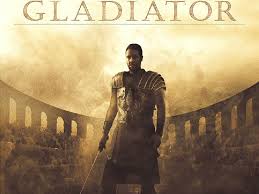
Also in the same book, the script was being re-written daily on Dreamwork's tentpole, big budget action movie. The star, Russell Crowe, was problematic. It was a struggle to find any harmony on that set, from director Ridley Scott to Crowe. And then one of the chief supporting actors died halfway through shooting. Do you reshoot? Rewrite to reflect the character's demise as well? This time, the stakes were incredibly high and tensions were bursting. Many people thought this movie would bomb. Daily rewrites speak to a production that greenlighted before a solid script was ready-- this is Trouble with a big t. The movie? "Gladiator." And in my opinion, a very solid, well done movie.
There is a solid track record of great movies having tension, trouble-filled sets. "Casablanca" was famous for it's trouble, especially with the script.
Now, my tendency is to use this as an excuse. For instance, I caught myself thinking, "see? I can rush into production with "72" before the script is ready!" No. No. No. Shooting a movie is warfare. But that doesn't mean you go into the fight without the best weapons. You can't always count on finding a loaded tank on the battlefield that you can jump into and save the day.
Anyway, interesting thoughts.
On the set, things were equally smooth. 1st AD Joey Stewart did his "white" schedule, and for the first time in his career and anyone else he knew, the strip board didn't change. We did our scenes and made our days. Again, there were some problems, but we met the challenges head on. I heard several crew people say they've never been on such a smooth running set.
The people-pleaser in me has gotten caught up in seeking a smooth and harmonious set above all else. But I have learned that a set of people holding pinkies and sinking Barney songs doesn't always transfer over to the actual movie. And likewise, sets where directors and actors are throwing stuff at each other, yelling expletives at every intense moment, sometimes come forth with masterpieces.
I've been reading a book about Dreamworks SKG and what went on behind the scenes and several stories popped out. First, on Sam Mendes first big movie as a director, Spielberg himself pulled Mendes aside after seeing the first couple days dailies to find out what was wrong. Spielberg gave Mendes some real help-- but other executives were ready to can him and quick. For Dreamworks, this little movie Mendes was directing was way on the bottom of the attention scale for their production slate at the time. They had much, much bigger fish to fry. And maybe because of that, the executives were willing to allow Mendes to continue-- I think if it had any bigger profile, they'd have canned him. The movie? Academy Award Winning "American Beauty."
Also in the same book, the script was being re-written daily on Dreamwork's tentpole, big budget action movie. The star, Russell Crowe, was problematic. It was a struggle to find any harmony on that set, from director Ridley Scott to Crowe. And then one of the chief supporting actors died halfway through shooting. Do you reshoot? Rewrite to reflect the character's demise as well? This time, the stakes were incredibly high and tensions were bursting. Many people thought this movie would bomb. Daily rewrites speak to a production that greenlighted before a solid script was ready-- this is Trouble with a big t. The movie? "Gladiator." And in my opinion, a very solid, well done movie.
There is a solid track record of great movies having tension, trouble-filled sets. "Casablanca" was famous for it's trouble, especially with the script.
Now, my tendency is to use this as an excuse. For instance, I caught myself thinking, "see? I can rush into production with "72" before the script is ready!" No. No. No. Shooting a movie is warfare. But that doesn't mean you go into the fight without the best weapons. You can't always count on finding a loaded tank on the battlefield that you can jump into and save the day.
Anyway, interesting thoughts.
Labels:
A Promise Kept,
American Beauty,
Dreamworks,
Gladiator
Saturday, July 24, 2010
"The Imposter"
This past February, our movie "The Imposter" was released in Christian bookstores everywhere and with Christian movie online stores. For SFilms, this was our fourth movie and our first specifically targeted for the Christian market. We feel we have made a movie with a very important message-- the effects of wearing masks and masquerades in the church and the importance of needing to pull them out and see the real you-- the beautiful and the ugly, so you can kill that part.
We need your help. As we gear up for making more movies, the people that can partner with us take a look at how the movie has performed. So if you haven't bought the movie, please go down to the nearest Christian bookstore or online portal and buy one. If you have already, they would make a great gift.
It would be awesome if people kept going up to the manager at Lifeway, or Family Life requesting Imposter because they can't keep enough on the shelves. If you like the movie, talk about it. Share the link with your friends. Encourage them to buy the movie.
In the upcoming months, it's critical that the big dollar people see this as the direction faith-based movies can go-- real, honest, where the rubber meets the road, kind of storytelling. If you agree, we need your help and support.
Write about the movie in blogs and forums... on facebook and myspace. If you have any ideas you'd like to see from me, let me know. We gave away a few CD Soundtracks to help build the facebook group. I'd be open to more things like that.
Most movies, even the bigger Christian films, have a lot of money spent on advertising and marketing. We've spent very little. We're hoping that the most powerful form of advertising through the centuries will work here-- word of mouth. So please help us spread the word. If I can find a way to recognize our biggest cheerleaders for this movie-- I'd be gad to send a CD Soundtrack or an original script.
Thanks in advance for your support!
We need your help. As we gear up for making more movies, the people that can partner with us take a look at how the movie has performed. So if you haven't bought the movie, please go down to the nearest Christian bookstore or online portal and buy one. If you have already, they would make a great gift.
It would be awesome if people kept going up to the manager at Lifeway, or Family Life requesting Imposter because they can't keep enough on the shelves. If you like the movie, talk about it. Share the link with your friends. Encourage them to buy the movie.
In the upcoming months, it's critical that the big dollar people see this as the direction faith-based movies can go-- real, honest, where the rubber meets the road, kind of storytelling. If you agree, we need your help and support.
Write about the movie in blogs and forums... on facebook and myspace. If you have any ideas you'd like to see from me, let me know. We gave away a few CD Soundtracks to help build the facebook group. I'd be open to more things like that.
Most movies, even the bigger Christian films, have a lot of money spent on advertising and marketing. We've spent very little. We're hoping that the most powerful form of advertising through the centuries will work here-- word of mouth. So please help us spread the word. If I can find a way to recognize our biggest cheerleaders for this movie-- I'd be gad to send a CD Soundtrack or an original script.
Thanks in advance for your support!
Labels:
The Imposter movie
Subscribe to:
Posts (Atom)