I love some of these viral videos. What a great marketing idea. One of the first I noticed was "Beware the Doghouse," which was a JC Penney's creation. The great thing about this approach is that you don't realize it's basically a commercial. Just one little tap at the end of a very funny video. Take a look:
So there's the funny one. Now, here's a powerful, uplifting video that you have no idea until the final moment it's a commercial. And by that time, it's totally forgiveable. I still think about this commercial long, long after I've seen it.
I love these kind of commercials. Being a filmmaker, I guess when you take the time to tell the story, I feel it's so much stronger.
You know of any other real good ones? Let me know.
Sunday, August 29, 2010


Thursday, August 26, 2010
The Roller Coaster
Without perseverance, a movie doesn't get made. I need to hear that. And probably every other filmmaker as well. You hear the stories about how Dead Poet's Society was optioned and sent into turnaround for many years. How it had basically died before being birthed. Again and again.
I've read about how a Grip in New York City had written a script that he thought would never see the light of day. And when Gripping wasn't paying the bills, he waited tables. And served lunch to an agent. Who said sure, I'll read it. Then several made offers. Big offers, in the high six figures for the script. That's a lot of tip money. He turned it down, because he really, really wanted to direct. He stuck to his guns when everyone thought he was crazy. Eventually, a studio believed enough in the script and ultimately in him, to back the film with him in the director's chair. That's how Boiler Room got made.
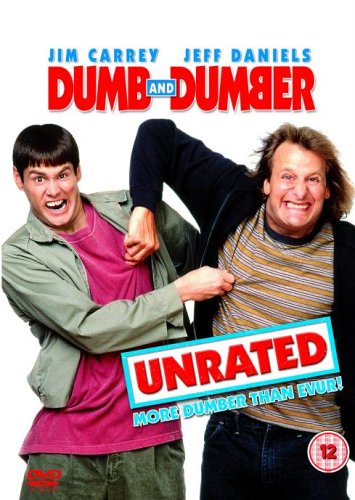
 Then there's the classic, Dumb & Dumber. A producer read the script and laughed out loud reading it. But for two years, nobody else did in Hollywood. Studios would call the producer and ask him why he was sending this stuff (but they didn't use the word "stuff.") His reputation and bank account were hitting lows. They would resubmit the script with different titles (like Power Tools Are Not Toys) because the readers, young twenty-somethings, would be rotated through and they'd get a fresh chance.
The producer had practically given up. Had a meeting about something else with another exec and somehow got talking about it. Exec recalls how he almost peed in his pants reading it-- it was sooo funny.
So they get a new life on the project. The studio will greenlight a small budget if they can get two actors off this list of 25. *Every* single one turned it down. The Mask was coming out... Ace Ventura wasn't there yet. Jim Carrey could be gotten for a million if they moved fast. Which they didn't. The Mask opened and they had to pay higher dollars but they did. And the movie got made. With the Farrelly Bros. directing.
Most movies have stories about being dead in the water, perhaps multiple times. It's happened to me. I remember attaching Joey Lauren Adams and Farrah Fawcett to A Promise Kept. Then Joey's manager called my casting director backing out. And Farrah pulled out of everything that fall. I thought we had some momentum. I can remember sitting on the bed, just feeling defeated. So I emailed Joey wishing her luck. She emailed me back saying what was I talking about... she was doing the movie.
Making a movie is a big roller coaster. Sometimes you're hitting the heights. Sometimes the lows. Hopefully you can get through the ride and safely into the station.
I've read about how a Grip in New York City had written a script that he thought would never see the light of day. And when Gripping wasn't paying the bills, he waited tables. And served lunch to an agent. Who said sure, I'll read it. Then several made offers. Big offers, in the high six figures for the script. That's a lot of tip money. He turned it down, because he really, really wanted to direct. He stuck to his guns when everyone thought he was crazy. Eventually, a studio believed enough in the script and ultimately in him, to back the film with him in the director's chair. That's how Boiler Room got made.
The producer had practically given up. Had a meeting about something else with another exec and somehow got talking about it. Exec recalls how he almost peed in his pants reading it-- it was sooo funny.
So they get a new life on the project. The studio will greenlight a small budget if they can get two actors off this list of 25. *Every* single one turned it down. The Mask was coming out... Ace Ventura wasn't there yet. Jim Carrey could be gotten for a million if they moved fast. Which they didn't. The Mask opened and they had to pay higher dollars but they did. And the movie got made. With the Farrelly Bros. directing.
Most movies have stories about being dead in the water, perhaps multiple times. It's happened to me. I remember attaching Joey Lauren Adams and Farrah Fawcett to A Promise Kept. Then Joey's manager called my casting director backing out. And Farrah pulled out of everything that fall. I thought we had some momentum. I can remember sitting on the bed, just feeling defeated. So I emailed Joey wishing her luck. She emailed me back saying what was I talking about... she was doing the movie.
Making a movie is a big roller coaster. Sometimes you're hitting the heights. Sometimes the lows. Hopefully you can get through the ride and safely into the station.
Wednesday, August 25, 2010
Film Watching
Watching another low budget indie film. It was shot here in Dallas a few years ago. There's a couple of actors who are good (one really good). Then there's the rest of the cast. The story idea is very strong-- on paper, I can see why people rallied to this. However, the writing's a bit on the nose, but that problem alone wouldn't sink it.
What does sink it is the horrible production value. I don't know what the DP was thinking (rumor has it he didn't respect the director so he spent his time trying to co-direct the movie)-- but his work is awful. You got color balance issues, horrible framing, poor or non-existent lighting. And it was shot on standard def. Now I know you've got to work with what you've got-- so we can forgive the lack of lighting instruments... but that doesn't excuse mixing tungsten and daylight or horrible framing. Looking at this movie, the director shouldn't have respected the DP, not vice versa.
Then there's sound-- or at least the days they had a sound person. I don't know. There's a few scenes it honestly sounds like a camera mic at best.
Watching this movie, I get the feeling the filmmakers were other people pretending to be filmmakers. If you don't have resources, that's fine. Study, learn, research. Find out everything you can about your craft. Because storytelling without money can still be done effectively. But you have to be professional about it.
Take this same project, with the same budget-- but have the scriptwriter read a few more books about writing on the subtext. Have the DP focus only on his job. Get an intern at least to hold a boom mic 100% of the time. And sweat over the casting of every single role, to get the best possible actor (not just your friends)... and you might have a good little indie film.
But even so, it won't find any real distribution. Because you need a recognizable name actor for that.
What does sink it is the horrible production value. I don't know what the DP was thinking (rumor has it he didn't respect the director so he spent his time trying to co-direct the movie)-- but his work is awful. You got color balance issues, horrible framing, poor or non-existent lighting. And it was shot on standard def. Now I know you've got to work with what you've got-- so we can forgive the lack of lighting instruments... but that doesn't excuse mixing tungsten and daylight or horrible framing. Looking at this movie, the director shouldn't have respected the DP, not vice versa.
Then there's sound-- or at least the days they had a sound person. I don't know. There's a few scenes it honestly sounds like a camera mic at best.
Watching this movie, I get the feeling the filmmakers were other people pretending to be filmmakers. If you don't have resources, that's fine. Study, learn, research. Find out everything you can about your craft. Because storytelling without money can still be done effectively. But you have to be professional about it.
Take this same project, with the same budget-- but have the scriptwriter read a few more books about writing on the subtext. Have the DP focus only on his job. Get an intern at least to hold a boom mic 100% of the time. And sweat over the casting of every single role, to get the best possible actor (not just your friends)... and you might have a good little indie film.
But even so, it won't find any real distribution. Because you need a recognizable name actor for that.
Monday, August 23, 2010
Purpose Versus Ego
This principle speaks to the foundation of the way I approach my life. When I mention purpose, it's more than a Rick Warren slogan or a new program to put on. It has got to be a way of life with me. It's my daily struggle.
What is this struggle? To choose Purpose or to choose Ego. I equate Ego to what the Apostle Paul calls the Flesh. In Romans, he clearly writes about the duality of man-- the Spirit and the Flesh. Purpose is living or walking in the Spirit (Rom 8). It's choosing to be His servant-- so it's not my "purpose." It's His.
So daily, hourly, minute by minute, I can choose to walk in Ego. Or I can choose to walk in His purpose. What then is Purpose? I would have to do the math for you and it would loose the meaning. It's certainly easier at times to identify what's Ego. When I look after my own needs or wants ahead of my wife or children. My needs ahead of His.
Now this certianly differs from the conventional "Christian" thinking of today. You can think about your needs-- that's okay! It's your "wants" we have to scale back-- control-- minimize.
No. If you have chosen to be His Disciple, you have died. You have now been risen to serve Him (see Romans 6). I get into trouble when I try and control the Ego. Or minimize. There's only one answer to the Ego. Death. I cannot assauge it, educate or control it. If I do that, then I walk in the Ego.
Sure, I have lived my life saying "it's not *that* bad." At least I'm not an adulterer! Or a drunk! A little Ego is the same as a lot of Ego. Or as Kerry Livgren so aptly said on the set of "The Imposter:"
You have two barrels-- one of fine win, the other sewage. Take a spoon of fine wine and pour it into the barrel of sewage and you've got... sewage. Take a spoon of the sewage and put it into the barrel of fine wine and you've got... sewage.
My friends, the Ego is sewage. A little bit will still ruin the whole barrel. So determine to kill it. Daily.
What is this struggle? To choose Purpose or to choose Ego. I equate Ego to what the Apostle Paul calls the Flesh. In Romans, he clearly writes about the duality of man-- the Spirit and the Flesh. Purpose is living or walking in the Spirit (Rom 8). It's choosing to be His servant-- so it's not my "purpose." It's His.
So daily, hourly, minute by minute, I can choose to walk in Ego. Or I can choose to walk in His purpose. What then is Purpose? I would have to do the math for you and it would loose the meaning. It's certainly easier at times to identify what's Ego. When I look after my own needs or wants ahead of my wife or children. My needs ahead of His.
Now this certianly differs from the conventional "Christian" thinking of today. You can think about your needs-- that's okay! It's your "wants" we have to scale back-- control-- minimize.
No. If you have chosen to be His Disciple, you have died. You have now been risen to serve Him (see Romans 6). I get into trouble when I try and control the Ego. Or minimize. There's only one answer to the Ego. Death. I cannot assauge it, educate or control it. If I do that, then I walk in the Ego.
Sure, I have lived my life saying "it's not *that* bad." At least I'm not an adulterer! Or a drunk! A little Ego is the same as a lot of Ego. Or as Kerry Livgren so aptly said on the set of "The Imposter:"
You have two barrels-- one of fine win, the other sewage. Take a spoon of fine wine and pour it into the barrel of sewage and you've got... sewage. Take a spoon of the sewage and put it into the barrel of fine wine and you've got... sewage.
My friends, the Ego is sewage. A little bit will still ruin the whole barrel. So determine to kill it. Daily.
Friday, August 20, 2010
Those Who Can Teach
I got asked to speak a few times after finishing my first feature film "The Keyman." After the second movie "A Promise Kept," I had developed the "Greenlight Yourself" idea and would use it when invited to speak to the indie film clubs and such.
At that point I posted on the website that a DVD training program for making your own film would be coming out. Then I shelved that plan. Why? I had only done two movies. I really felt I need a little more on my resume, and more importantly, experiences I could share, before offering to teach people how to do it.
Now after five feature films, I've started doing some seminars in between the projects. And one thing that amazes me as I look around at other offerings (trying to figure out what to teach that isn't there and what to charge), is the lack of experience in the so called "experts." I've seen Filmmaking seminars and workshops where the teachers have at best, made a couple of shorts that were in a festival. Or had finally completed one feature film.
Yeah maybe. I guess if you can really get some good information from them, then by all means. I can only go by my own experiences-- when I started down this movie making path, I sat in on everything I could find. I read all the books. I sat and listened to the panels at the film festivals. One of the most helpful seminars I attended was by a guy who had only made shorts (though award winning and very popular), and then had been an executive at a major distributor.
Then you have Robert McKee. Though heavy on structure, he's one of the best screenwriter teachers. I learned tons through his seminar and book. But even sitting in his seminar after making Keyman, I had one more produced screenplay than he did. Some people are born to teach.
I met one fellow filmmaker who had made a movie that was pretty bad. But somehow, a big distributor picked up US video rights. It bombed and he wondered why he could never get foreign or television. I talked to my foreign distributor at the time and she told me that the movie was just too bad.
So that filmmaker created a seminar on how to get Distribution, and that's all he does I think. He probably has some good information. I mean, look at film schools (outside the biggies). The people teaching film aren't the ones out there making movies. And as I've started doing seminars and teaching at UTA last spring, yes, I was a bit worried about the old adage "those who do, do. those who can't, teach."
But the bottom line is that I really enjoy teaching. And yes, it's a way to earn a little revenue in between the movies. And I'd like to keep doing both-- teaching and making movies. Don't see a lot out there doing both. So we'll see if I can do it.
So what are your thoughts on all the seminars and workshops out there?
At that point I posted on the website that a DVD training program for making your own film would be coming out. Then I shelved that plan. Why? I had only done two movies. I really felt I need a little more on my resume, and more importantly, experiences I could share, before offering to teach people how to do it.
Now after five feature films, I've started doing some seminars in between the projects. And one thing that amazes me as I look around at other offerings (trying to figure out what to teach that isn't there and what to charge), is the lack of experience in the so called "experts." I've seen Filmmaking seminars and workshops where the teachers have at best, made a couple of shorts that were in a festival. Or had finally completed one feature film.
Yeah maybe. I guess if you can really get some good information from them, then by all means. I can only go by my own experiences-- when I started down this movie making path, I sat in on everything I could find. I read all the books. I sat and listened to the panels at the film festivals. One of the most helpful seminars I attended was by a guy who had only made shorts (though award winning and very popular), and then had been an executive at a major distributor.
Then you have Robert McKee. Though heavy on structure, he's one of the best screenwriter teachers. I learned tons through his seminar and book. But even sitting in his seminar after making Keyman, I had one more produced screenplay than he did. Some people are born to teach.
I met one fellow filmmaker who had made a movie that was pretty bad. But somehow, a big distributor picked up US video rights. It bombed and he wondered why he could never get foreign or television. I talked to my foreign distributor at the time and she told me that the movie was just too bad.
So that filmmaker created a seminar on how to get Distribution, and that's all he does I think. He probably has some good information. I mean, look at film schools (outside the biggies). The people teaching film aren't the ones out there making movies. And as I've started doing seminars and teaching at UTA last spring, yes, I was a bit worried about the old adage "those who do, do. those who can't, teach."
But the bottom line is that I really enjoy teaching. And yes, it's a way to earn a little revenue in between the movies. And I'd like to keep doing both-- teaching and making movies. Don't see a lot out there doing both. So we'll see if I can do it.
So what are your thoughts on all the seminars and workshops out there?
Thursday, August 19, 2010
Actor Demo Reels

I look for roles similar to the one I'm casting. So the actor's demo probably needs to show a variety of types. You're a forty year old white male? Sure, put the detective on there, and a teacher. But also something way out there-- a drug addict or something out of type. But it better be good.
And that is probably the biggest thing-- your performance should be awesome. Don't just include it because you like the way you looked. What I mean by "awesome" is that your performance is as close to possible to theatrical truth that an actor can get.
Don't have anything? Then get something shot. And one thing with a title card front and contact info at end is acceptable if you don't have anything else. But keep adding to it as you move forward in your experience.
When you get one edited, have a small version you can email. Then have one bigger you put on vimeo or youtube. Quality is always good, but if all you're given is a VHS tape, then go with it. As a director, I don't fault poor quality recording. On my first film "The Keyman," veteran actor Tom Wright's manager sent me a tape that was made from a vhs to vhs to vhs. But I didn't care about that-- it was the performance that mattered.
A demo is basically a step up from the headshot and in this YouTube age, it's becoming increasingly important. Looks like I'm all booked up for this Tuesday's demo shoot I'm doing for some actors, but if you think you need something, contact me and I'll see if we can find enough people to pay the crew.
Wednesday, August 18, 2010
Cultural Differences
Cultural differences. You expect it between a goat farmer in the mountains of Afghanistan, and a blackberry wielding thirty-something in Dallas. But I have found you don't have to go far to find significant cultural differences.
Take New York and Fort Worth. A year ago we were in the midst of shooting Rising Stars. The producers were from the Big Apple (and I don't mean Steve Jobs). And a few of the crew came down from NYC having worked with the producers before. Then we had out Texas crew. For the most part it was harmonious. But in working through that environment, I could see how cultural different people from the two areas are.
I am going to paint with the broad brush of generalities-- so in the upcoming conclusions, of course everyone from NYC is not this way and everyone from Texas is not this way. So just back off!
First, New Yorkers find courtesy to be unnecessary to do business. While Texans are slow to do business until the weather, the Cowboys, and medical problems with the body are discussed. So communications from the NYC producers will be short, extremely direct and sometimes hard to take if you're a Texan. "Wow, he's so rude!" Meanwhile, the NYC producer is saying "they're so slow and verbose!"
Texans are laid back, like a steer chewing a cud. New Yorkers are driven, like a taxi cab down Broadway. The problems occur when one cultural group makes assumptions about the other that aren't true-- like the NYC bias that the Texas crew isn't as good. Or the Texas crew assuming the NYC people think they're not as good.
It's not that New Yorkers aren't courteous. They believe that there's a time for courtesy, and it's just not now, at this moment.
There are loads of similarities of course. Both groups love to have a good laugh. Both groups have artistic creativity. And both groups can come together to make a wonderful movie like "Rising Stars."
Take New York and Fort Worth. A year ago we were in the midst of shooting Rising Stars. The producers were from the Big Apple (and I don't mean Steve Jobs). And a few of the crew came down from NYC having worked with the producers before. Then we had out Texas crew. For the most part it was harmonious. But in working through that environment, I could see how cultural different people from the two areas are.
I am going to paint with the broad brush of generalities-- so in the upcoming conclusions, of course everyone from NYC is not this way and everyone from Texas is not this way. So just back off!
First, New Yorkers find courtesy to be unnecessary to do business. While Texans are slow to do business until the weather, the Cowboys, and medical problems with the body are discussed. So communications from the NYC producers will be short, extremely direct and sometimes hard to take if you're a Texan. "Wow, he's so rude!" Meanwhile, the NYC producer is saying "they're so slow and verbose!"
Texans are laid back, like a steer chewing a cud. New Yorkers are driven, like a taxi cab down Broadway. The problems occur when one cultural group makes assumptions about the other that aren't true-- like the NYC bias that the Texas crew isn't as good. Or the Texas crew assuming the NYC people think they're not as good.
It's not that New Yorkers aren't courteous. They believe that there's a time for courtesy, and it's just not now, at this moment.
There are loads of similarities of course. Both groups love to have a good laugh. Both groups have artistic creativity. And both groups can come together to make a wonderful movie like "Rising Stars."
Subscribe to:
Posts (Atom)